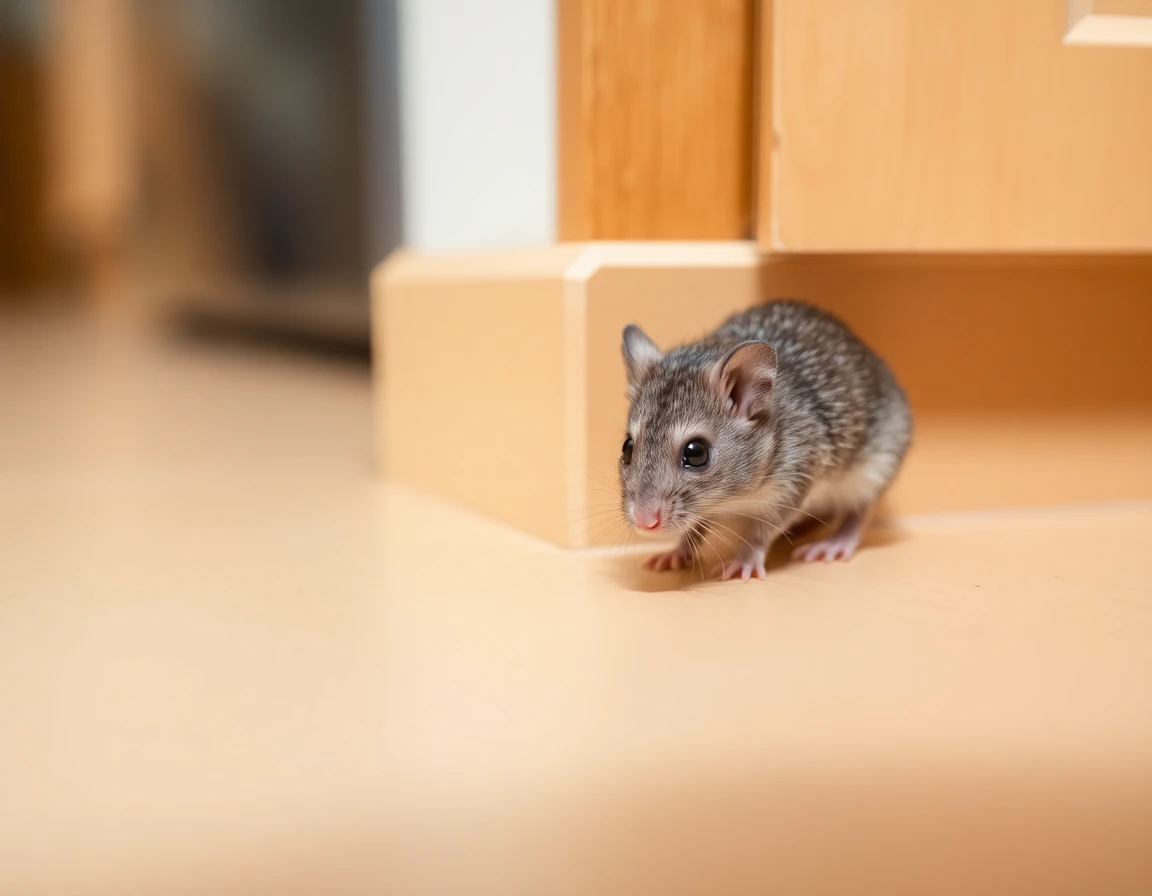
Mouse Control in French-speaking Switzerland
Mice can squeeze through gaps of just 6 mm. Our technicians locate every entry point, apply targeted treatments and advise on proofing measures — for lasting, reliable results.
Get a Free QuoteMice in the Home: A Bigger Problem Than It Seems
The common house mouse (Mus musculus) is one of the most successful mammals on Earth, and one of the most persistent household pests in French-speaking Switzerland. Despite being small — typically 6–9 cm body length, weighing just 20–30 g — a mouse infestation poses significant health and safety risks. Mice contaminate 10 times more food than they eat, spread leptospirosis, salmonella and hantavirus, trigger asthma and allergies through their dried urine, and gnaw through electrical cables and insulation.
Mice are prolific breeders. A female can produce 6–10 litters per year, with 4–8 pups per litter. In the warm conditions of a centrally heated apartment, breeding continues year-round. This means a small initial problem — perhaps just a few mice exploring from a neighbouring building or a nearby garden — can grow into a significant infestation within a matter of weeks if not addressed.
Supermarket snap traps and poison sachets are rarely sufficient for an established infestation. They may catch individual mice but cannot address the colony as a whole or eliminate the entry routes that allow new mice to continue arriving.
How to Tell If You Have Mice
Droppings
Tiny black droppings, 3–6 mm long, along walls, inside kitchen drawers, behind appliances and in food cupboards. Fresh droppings are soft and dark; older ones are harder and grey.
Gnaw marks
Small, neat gnaw marks on food packaging, skirting boards, cables and furniture. Unlike rats, mice often gnaw a small hole and leave a characteristic serrated edge.
Nests
Compact nests made from shredded paper, fabric, insulation or dried plant material, hidden inside wall cavities, behind kitchen units or under floorboards.
Urine trails
A persistent musty ammonia smell, especially in enclosed areas such as cupboards and wall voids. UV light can reveal urine trails along runways.
Noise
Light scurrying or scratching sounds in walls and ceilings, typically at night. Mice are agile climbers and can access upper floors via service ducts.
Footprints
In dusty areas, small 5-toed footprints and tail drag marks can confirm mouse activity.
Our Mouse Control Method
Our approach goes well beyond simply placing traps or bait. Effective mouse control requires understanding how the mice are getting in and what is sustaining the population inside the building.
Inspection and mapping
We inspect the property thoroughly, mapping droppings, gnaw damage, runways and entry points. We pay particular attention to utility entry points, gaps around pipes, open air vents, cavity walls and any exterior openings at ground level.
Treatment deployment
We place tamper-resistant bait stations in strategic locations based on our inspection findings. We use Swiss-approved rodenticides in appropriate formulations. Where pets or children are present, we select locked bait stations and secure placement positions accordingly.
Follow-up and monitoring
We return to check bait uptake, monitor activity levels and replenish or reposition stations as required. Most mouse infestations are fully resolved within 2–4 weeks with a professional treatment programme.
Proofing recommendations
We provide written recommendations for sealing entry points and reducing the conditions that attract mice — food storage improvements, waste management, vegetation management. This is the most important step for preventing reinfestation.
Get a Free Quote
Contact us and we will get back to you quickly with a tailored quote.
Need a pest control expert?
Contact us for a free, no-obligation quote. We respond quickly throughout French-speaking Switzerland.
Get a Free Quote