General Advice
Who Pays for Pest Control in Switzerland: Tenant or Landlord?
Rights and obligations of tenants and landlords in Switzerland when it comes to pest infestations — and what the law says.
The Legal Framework in Switzerland
In Switzerland, the legal relationship between tenants and landlords is primarily governed by the Swiss Code of Obligations (Code des obligations, CO). Under Article 256 CO, the landlord is obliged to hand over the property in a suitable condition for its intended use and to maintain it in that condition throughout the tenancy. This general obligation forms the basis for determining who is responsible for pest control costs.
However, Swiss tenancy law does not contain a specific provision dedicated to pest infestations. This means that responsibility is determined on a case-by-case basis, with reference to the origin of the infestation, the lease agreement, and the principle of fault. In practice, disputes over pest control costs are relatively common and can be complex to resolve.
The Key Question: How Did the Infestation Start?
Swiss tenancy law and jurisprudence have established a general principle: responsibility follows the origin of the infestation. The two scenarios below cover the most common situations:
Landlord's Responsibility
- The infestation pre-existed the current tenancy (pests were already present when the tenant moved in)
- The infestation originates from structural defects in the building (e.g., cracks allowing rodent entry, defective drains)
- Pests have migrated from common areas or other units in the building under the landlord's management
- The landlord failed to act on a reported infestation in a timely manner, allowing it to worsen
Tenant's Responsibility
- The tenant introduced the pest (e.g., bed bugs brought back from travel, cockroaches via contaminated goods)
- The infestation is directly attributable to the tenant's behaviour (e.g., poor waste management attracting rodents, leaving food unsealed)
- The tenant failed to report a known infestation promptly, allowing it to spread
- The lease agreement explicitly assigns pest control responsibility to the tenant for specific pests
Bed Bugs: A Special Case
Bed bugs deserve particular attention because they are extremely difficult to attribute to a single source and because the relevant jurisprudence in Switzerland has evolved significantly in recent years. Several cantonal courts and the Swiss Tenants' Association (Asloca) have addressed bed bug cases, leading to the following general guidance:
- Infestation discovered at move-in or shortly after: The landlord is generally presumed responsible, as the infestation is likely to have pre-dated the tenancy. The tenant must report the infestation in writing immediately upon discovery.
- Infestation discovered after several months or years of tenancy: The presumption shifts toward the tenant, as the introduction of bed bugs during travel or via second-hand furniture becomes more plausible. However, proof of introduction is rarely straightforward.
- Multi-unit buildings: Where bed bugs have spread between units, the landlord may bear responsibility for treatment of the entire building, particularly where the original source cannot be established.
Practical Steps If You Discover Pests
Report in Writing, Immediately
Whether you are a tenant or a landlord, put your notification in writing (email or registered letter) as soon as you become aware of an infestation. Record the date of discovery, the type of pest, and the affected areas. Late reporting can shift or complicate responsibility.
Document the Evidence
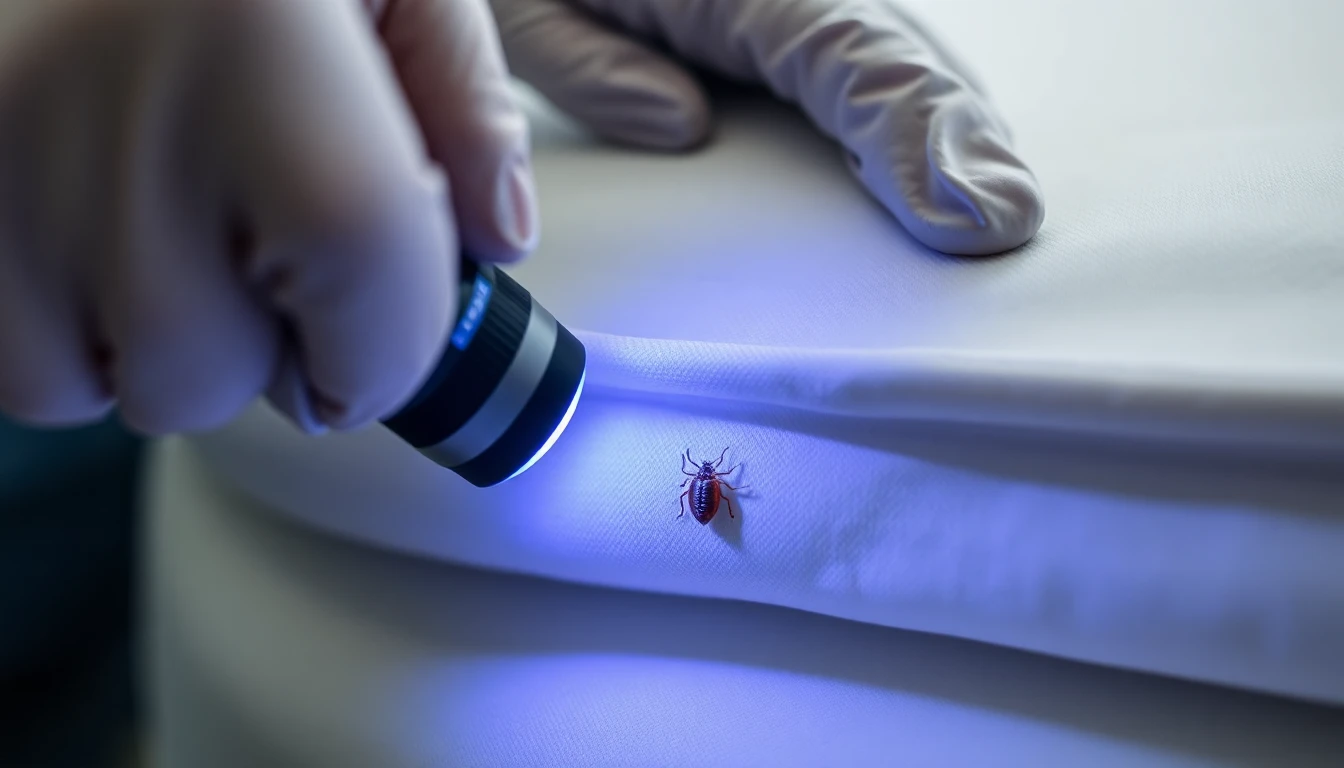
Photograph the signs of infestation and preserve samples where possible. A professional inspection report (from a certified pest control operator) will provide objective evidence of the type and extent of the infestation, and may help establish the likely origin.
Seek Professional Advice
Tenants can contact Asloca (the Swiss Tenants' Association) for free legal guidance. Landlords may wish to consult their property management association or legal counsel. In most cases, a negotiated agreement between the parties — sharing costs where origin is unclear — is preferable to protracted litigation.
Act Without Delay
Regardless of who is ultimately responsible for the cost, the infestation should be treated promptly to prevent it worsening. Delays in treatment that allow the infestation to spread may increase the eventual cost and complicate the legal picture. A party that delays treatment when they have the ability to act may bear additional liability for the resulting damage.
What the Lease Agreement Says
Always check your lease agreement. Some Swiss rental contracts contain specific clauses on pest control — for example, requiring the tenant to bear the cost of routine pest treatments (minor ant or silverfish issues) while the landlord remains responsible for structural infestations. However, contractual clauses that assign all pest control costs to the tenant regardless of origin may be challenged as abusive under Swiss tenancy law.
Our team can provide a professional inspection report documenting the type and extent of the infestation, which is often the essential first step in any dispute. We work with both tenants and landlords throughout French-speaking Switzerland.
Need a pest control expert?
Contact us for a free, no-obligation quote. We respond quickly throughout French-speaking Switzerland.
Get a Free Quote