Rodent Control
Stone Marten in the Loft: Signs, Damage and Solutions
How to detect a stone marten in your roof space, what damage it causes, and the professional exclusion solutions available.
About the Stone Marten
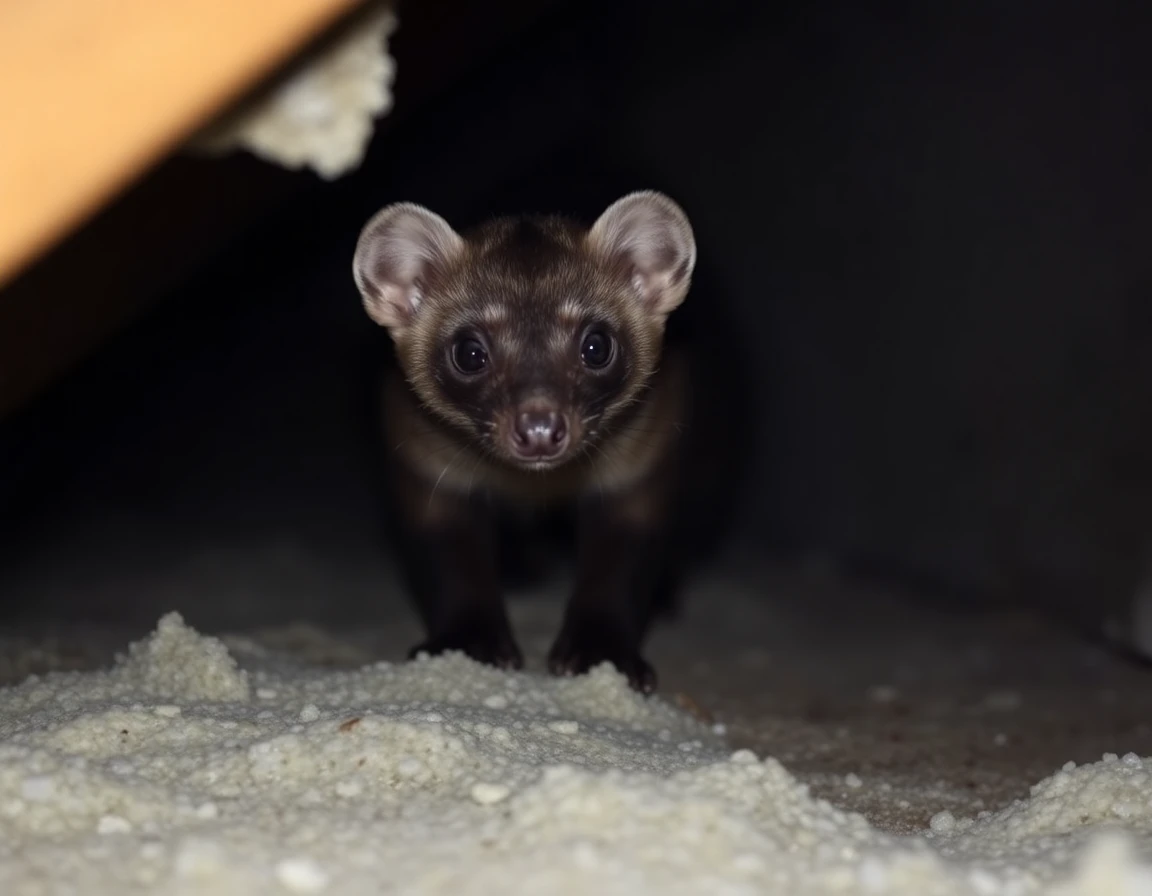
The stone marten (Martes foina), also known as the beech marten or house marten, is a small carnivore of the mustelid family — related to weasels and ferrets. Adults weigh between 1.5 and 2.5 kg and measure around 40–55 cm in body length, with a distinctive white bib on the throat and chest. They are nocturnal and extremely agile, capable of squeezing through gaps as small as 6 cm.
Unlike truly rural wildlife, the stone marten is well adapted to suburban and urban environments throughout French-speaking Switzerland. It readily exploits buildings for shelter, warmth, and as a safe location to raise its young. Attics, roof spaces, and the engine compartments of parked vehicles are among its favourite spots.
How to Tell If You Have a Stone Marten
Stone martens are most active between dusk and dawn. The following signs suggest one has taken up residence in or around your property:
- Noises at night: Thumping, scratching, and rolling sounds from the attic or ceiling, most intense between midnight and 4 am. Martens are significantly heavier than rodents, so the sounds tend to be louder and more erratic.
- Strong, musky odour: Stone martens scent-mark their territory with gland secretions and urine. A persistent, pungent smell from the roof space or garage is a reliable indicator.
- Droppings: Marten droppings are elongated, twisted, and contain fur, feathers, fruit seeds, and insect remains. They are typically 8–12 cm long and left in prominent locations as territorial markers.
- Footprints and tracks: Five-toed paw prints (roughly 4 cm wide) in dust, mud, or snow around the building's perimeter and on the roof.
- Damage to insulation: Torn, flattened, or soiled roof insulation where the animal has nested or used as a latrine area.
- Vehicle damage: If your car is parked outdoors overnight, look for chewed rubber hoses, coolant pipes, ignition cables, or fuel lines — stone martens are notorious for chewing vehicle engine components.
What Damage Can a Stone Marten Cause?
Do not underestimate the destructive potential of a stone marten in your property. Left unaddressed, the consequences can be costly:
Structural Damage
- Destruction of roof insulation (nesting, latrine use)
- Chewed electrical cables (fire risk)
- Damage to water pipes and heating ducts
- Gnawed wooden beams and joists
Health & Hygiene
- Urine and faeces contaminating insulation
- Risk of Leptospirosis (Weil's disease) via urine
- Ectoparasites (fleas, ticks) introduced to the attic
- Persistent odours penetrating living spaces
Professional Exclusion Solutions
In Switzerland, the stone marten is a protected species under the Federal Hunting Act (LChP) and may not be killed by homeowners without a specific cantonal permit. This means lethal trapping is not a standard option, and the only legally compliant approach is exclusion: preventing the animal from entering or returning to the property.
Our approach to stone marten exclusion involves the following steps:
Inspection and Entry Point Identification
Our technician performs a thorough inspection of the roof, eaves, and building exterior to identify all current and potential entry points. Even small gaps (6 cm or more) are candidates for exclusion.
One-Way Exclusion Device
A one-way exclusion device is installed at the primary entry point, allowing the marten to exit but not re-enter. Secondary entry points are sealed with durable, chew-resistant materials such as steel mesh or galvanised metal flashing.
Deterrents and Decontamination
After exclusion is confirmed, soiled insulation is removed and the space decontaminated. Repellent deterrents (ultrasonic devices, scent-based products) can be used as additional measures to discourage re-colonisation.
It is important to act promptly. A stone marten that has established a regular presence in your attic will return repeatedly — and may introduce young during spring and summer, making exclusion more complex. The sooner a professional intervenes, the simpler and less costly the solution will be.
Need a pest control expert?
Contact us for a free, no-obligation quote. We respond quickly throughout French-speaking Switzerland.
Get a Free Quote