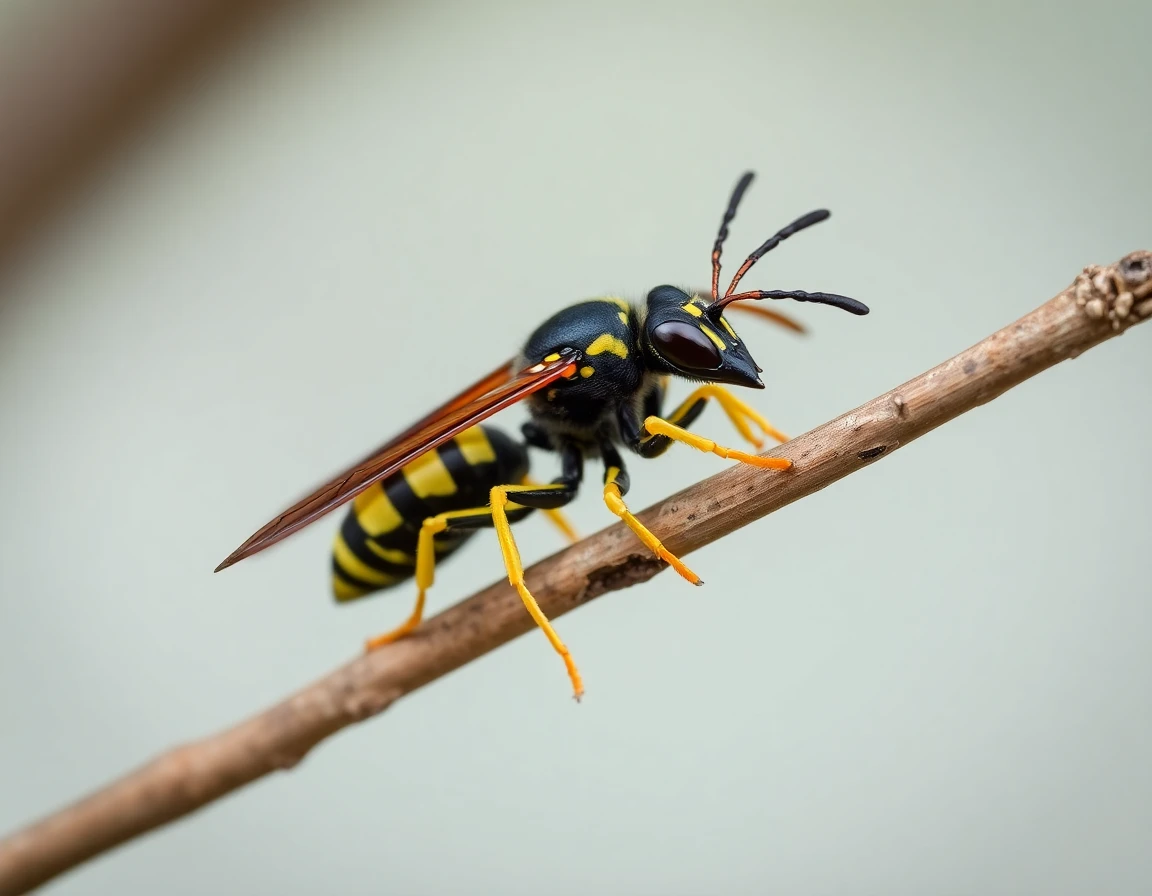
Insects
Asian Hornet in French-speaking Switzerland: What to Do If You Find a Nest
How to identify the Asian hornet, understand the risks, and respond safely if you discover a nest.
What Is the Asian Hornet?
The Asian hornet (Vespa velutina nigrithorax) is an invasive species originally from Southeast Asia that has spread rapidly across Europe since its accidental introduction into France around 2004. It has now been confirmed in French-speaking Switzerland, where it represents a serious ecological and public health concern.
Unlike the European hornet (Vespa crabro), the Asian hornet is a voracious predator of honeybees and other pollinators. A single nest can destroy tens of thousands of bees per season, with potentially devastating consequences for local agriculture and biodiversity. It is listed as an invasive alien species of EU concern.
How to Identify the Asian Hornet
Asian Hornet (Vespa velutina)
- Body length: 25–30 mm (queen up to 35 mm)
- Almost entirely dark brown or black body
- Single yellow-orange band on the 4th abdominal segment
- Yellow-orange face
- Yellow-tipped legs
- Nests often built high in trees or under roof eaves
- Active from spring to late autumn
European Hornet (Vespa crabro)
- Body length: 25–35 mm
- Reddish-brown and yellow body with yellow stripes
- Multiple yellow bands on the abdomen
- Reddish-brown head
- Brown legs
- Nests in hollow trees, attics, or wall cavities
- Active from spring to late autumn
If you are uncertain which species you are looking at, photograph the insect from a safe distance and contact a professional or your cantonal authority for identification assistance. Do not approach the nest to get a closer look.
The Risks
The Asian hornet is not inherently more aggressive toward humans than the European hornet when left undisturbed. However, it will defend its nest vigorously if threatened, and multiple stings can be dangerous — particularly for individuals with a venom allergy. As with all Hymenoptera stings, anaphylactic shock is possible and can be fatal without immediate medical attention.
The ecological threat is more significant: Asian hornets station themselves near beehives and snatch individual bees in mid-air. Affected hives can collapse within weeks. Beekeepers in French-speaking Switzerland are required by cantonal regulations to report sightings and nests to the relevant authorities.
What to Do If You Find a Nest
Do NOT Attempt to Destroy the Nest Yourself
Asian hornet nests can contain hundreds to thousands of workers and are defended aggressively when disturbed. Attempting removal without specialist equipment and training puts you at serious risk of multiple stings. Consumer insecticide sprays are not effective against aerial nests and will provoke the colony.
Keep Your Distance
Stay at least 5–10 metres away from the nest. Keep children and pets indoors. Do not make loud noises or vibrations near the nest, and avoid wearing dark-coloured clothing or strong perfumes near the area.
Report the Sighting
In Switzerland, Asian hornet sightings should be reported to your cantonal agricultural or nature authority, and to the national monitoring platform. Photograph the nest and its surroundings if you can do so safely from a distance.
Call a Certified Pest Control Professional
Professional removal of an Asian hornet nest requires full protective equipment, specialist vacuum devices, and knowledge of safe nest disposal. Our team is equipped and trained to handle Asian hornet nests throughout French-speaking Switzerland. We respond rapidly and coordinate with the cantonal authorities as required.
Nest Seasons and Locations
Asian hornet nests are typically built in two phases. A primary (or "spring") nest is built by the queen from March onward, often in a sheltered spot close to the ground — in a hedge, garden shed, or dense shrub. Once established, the colony relocates to a secondary (or "summer") nest, usually built much higher: in the crown of a tree, under roof overhangs, or on building facades. These secondary nests can reach the size of a football or larger by late summer.
The colony reaches its peak between August and October and dies off naturally with the first frosts. However, mated queens overwinter and found new nests the following spring — so a nest left untreated in one season will lead to multiple new nests the following year.
Need a pest control expert?
Contact us for a free, no-obligation quote. We respond quickly throughout French-speaking Switzerland.
Get a Free Quote